What Does a Certified Nursing Assistant (CNA) Actually Do?
If you’re considering a career as a CNA, you’ve probably seen a lot of vague job descriptions that say things like “provide patient care” and leave it at that. That’s technically true, but it doesn’t tell you much about what the work actually feels like on a given day.
Here’s a more honest picture.
The core of the job is hands-on patient care
CNAs are the people who spend the most time with patients. More than doctors, more than nurses. The work is physical, personal, and constant.
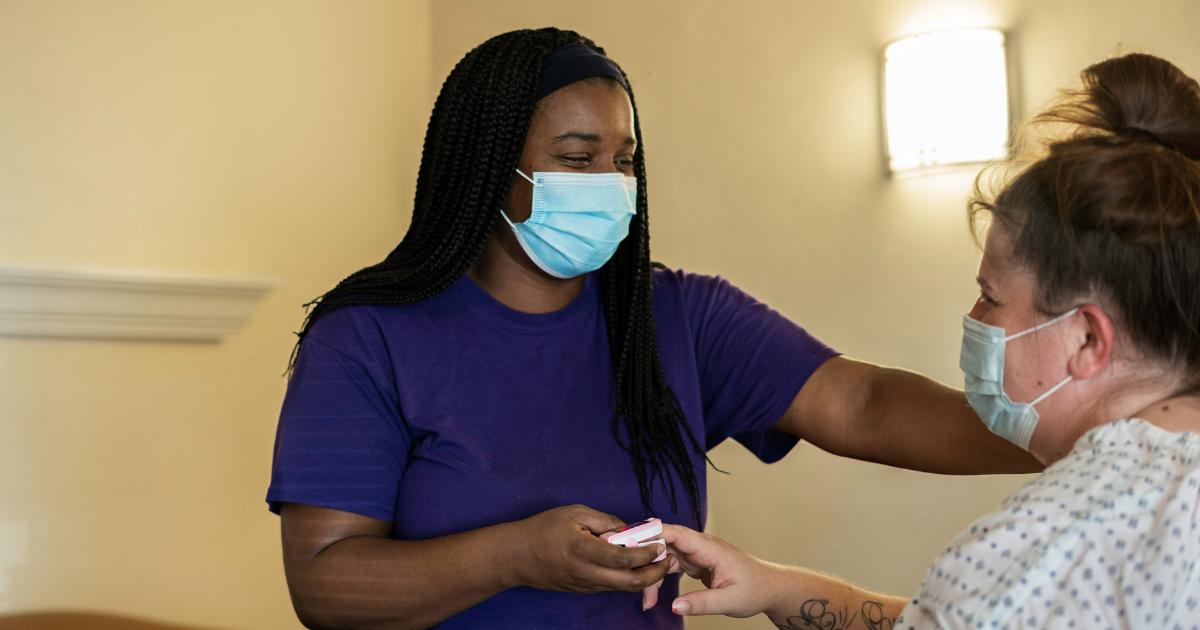
On a typical shift, a CNA might help patients with bathing, dressing, and grooming. You assist with mobility, helping people get in and out of bed, walk, or transfer to a wheelchair. You help with meals. You handle toileting and incontinence care. You measure and record vital signs like blood pressure and temperature.
You also serve as the eyes and ears of the nursing staff. Because you’re with patients more than anyone else, you’re often the first to notice when something changes, and you report that to the supervising nurse.
Petra Allied Health’s CNA course is 90 hours and covers all of this: 74 hours of classroom and lab instruction plus 16 hours of hands-on clinical training in a long-term care facility. After completing the course, graduates are eligible to take the Arkansas state certification exam.
Where CNAs typically work
Most people picture nursing homes, and that is one of the most common settings. But CNAs also work in hospitals, assisted living facilities, rehabilitation centers, and home health. The day-to-day looks a little different depending on the environment, but the core responsibilities stay the same.
In a nursing home or long-term care facility, you’re often working with the same residents day after day. You build relationships. You know their routines and preferences. That continuity is something a lot of CNAs say they value about the work.
In a hospital setting, the pace tends to be faster, the patients rotate more frequently, and the conditions you encounter are more varied.
What CNAs don’t do
This is where a lot of confusion comes in, so it’s worth being direct.
CNAs don’t draw blood. Blood draws require specific training in venipuncture, specimen handling, and lab safety protocols, and that falls outside the standard CNA scope of practice. If drawing blood is something you’re interested in, that’s a separate credential. Petra Allied Health offers a Phlebotomy Technician course (64 hours) that covers exactly that.
CNAs also don’t administer medications in most settings, don’t perform wound care, don’t insert or remove catheters, and don’t give injections. These tasks require licensed nurses or additional certification.
This isn’t a limitation so much as a reflection of what the role is. CNA work is about direct, daily patient care. The clinical and procedural side of healthcare is handled by other roles, and many CNAs go on to train for those roles over time.
What it takes to get started
Petra Allied Health’s CNA course is one of the fastest entry points into healthcare. At 90 hours, it can be completed in a matter of weeks. The total cost is $520, and nursing home sponsorship is available for students who get hired during training, which can cover tuition and waive the state testing fee.
Students must be at least 16 years old and cannot have a disqualifying criminal record. No prior healthcare experience is needed.
Building on the CNA credential
A CNA certification doesn’t have to be the end of the road. A lot of people use it as a starting point and add skills from there.
If you want to add blood draws and specimen collection to your skillset, Phlebotomy Technician training is 64 hours.
If you want to move into a broader clinical role that includes patient exams, blood draws, EKG procedures, and administrative tasks, the Medical Assistant course is 184 hours.
If diagnostic imaging interests you, the LLRT course (84 hours) trains you to perform limited-scope X-rays under physician supervision.
And if you’re drawn to the technical side of cardiac care, the EKG Technician course is 48 hours.
None of these require you to have a CNA credential first, but having one gives you a foundation in patient care that carries into any of them.
Is CNA work right for you?
This is a job for people who want to be physically present with patients and make a tangible difference in someone’s day. It’s not behind a desk. It’s not in front of a screen. It’s in the room, hands on, shift after shift.
That’s not for everyone, and that’s fine. But for the people it fits, it tends to fit well.